
OUTSIDE LOOKING IN

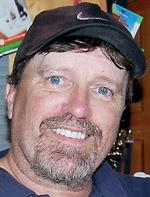
Life can be a zoo!
Because things have been a little hectic lately with fairs, town events, school starting, and athletics going full circle, I hadn't been able to get away and do something fun for myself all summer. So, I made it a point to take at least a few hours before summer officially ends on Saturday, Sept. 23 and do something I enjoy for a few hours.
One of my favorite things to visit is a nice zoo, so I took a one-hour road trip on Sunday from my home in Willmar to Freeport (near St. Cloud) where the Hemker Zoo is located. I had been there several years ago and enjoyed it immensely, but several new additions now make it a must-see.
Hemker Zoo, which opened in 1977, is the first zoo in the state to have a rhinocerus.
This family-owned zoo is the cleanest and most accessible I have ever come across. The Hemker family's home is right on the property so the animals are all well cared for at all times and each species has a large area to roam.
The zoo workers are also friendly and answer any questions you might have.
For a small additional fee on top of the admission fee, you or your child can hand feed a giraffe or a rhinoceros. It was incredible to see and experience. To feed a giraffe, you walk up a platform to reach them and, they in turn, lean their necks out and over the fence they are kept in to pull in large lettuce leaves with their slender black tongues.
There are two Great One-Horned Rhinos. Tio, whom they obtained in 2020, is fully grown and weighs over 5,000 pounds. For a fee, you can hand feed the rhino sweet potatoes and apples. To see the armor-like folds of skin on their bodies up close is mind boggling. I had never been that close to either animal.
The Hemker family is working to prevent rhinoceros extinction.
They also allow the feeding of several other of the more than 200 animals at the zoo.
If you are looking for something to do before that white stuff hits the ground, I suggest taking in this place. You won't be disappointed, especially getting an up-close look at a rhino.
How they were named
By now, most townspeople know that the name Minneota was derived from the Sioux language, meaning "much water." But not many know how the area townships got their names.
Eidsvold Township was initially created and organized as Upper Yellow Medicine in 1873 when 19 pioneer residents petitioned the county for township government. Because most of the first settlers here were from Norway, the name was eventually changed to Eidsvold, after a town northeast of Oslo, Norway. The settlers chose that city name because it was the birthplace of Norway's modern constitution in 1814.
The first settler of Eidsvold Township, according to records, was Nels Torgerson, who built his home along the south branch of the Yellow Medicine River west of what is now Minneota.
Grandview Township's name was authorized by the county to be changed to Warrington in 1873, but the name changed was never made. Grandview's name was originated by settlers because of its topographical feature.
Grandview's first settler was Orlando McQuestion who came in 1871.
Because the majority of Westerheim Township's settlers immigrated from Norway, the name Westerheim is Norwegian for "western home".
The first settlers in this township were Thorbjorn Aadson and Halvor Nyland.
Two other townships, Swede Prairie and Burton, are each located in Yellow Medicine County but have contained many Minneota residents over the years.
Swede Prairie Township originated in 1878 under the name Green Prairie. It was discovered that another town had the same name, settlers chose the name Swede Prairie because most of its early residents were from Sweden.
Burton Township, also in Yellow Medicine County, was formed in 1879. It was named after Burton French, the father of Minneota merchant Palmer French.